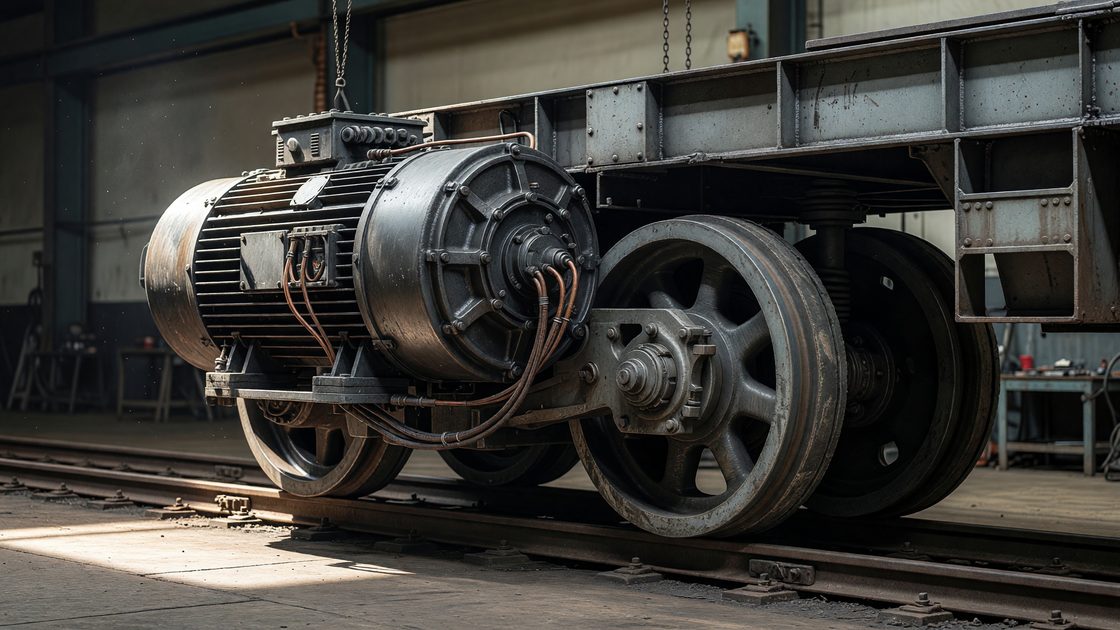
A diesel-electric locomotive does not put power to the rail mechanically the way a truck engine drives its wheels. The prime mover diesel engine turns a generator or alternator, which produces electrical power that traction motors — mounted directly on the axles — convert back into rotational force. That extra conversion step means a locomotive’s traction motors are themselves large rotating electrical machines with their own maintenance requirements, distinct from anything on the diesel engine side of the unit. Related: see our overview of preventive maintenance interval structure for how traction motor service fits into a broader program.
DC vs. AC Traction: Different Motors, Different Wear Patterns
Older and many mid-life locomotive fleets use DC traction motors, which rely on physical brushes riding against a commutator to carry current into the rotating armature. Brushes wear down through normal operation and the commutator surface can develop grooving or flat spots if brush pressure or alignment drifts. This is a genuinely consumable wear item — brush replacement is a scheduled, predictable maintenance task, and commutator resurfacing is a periodic shop job tied to accumulated running hours.
AC traction motors, standard on most locomotives built since the 1990s, use induction motors with no brushes or commutator, driven by variable-frequency inverters. This eliminates brush wear entirely and generally extends motor service intervals, but shifts the maintenance burden toward the power electronics that drive the motor — the inverter modules, which have their own thermal-cycling failure modes — and toward motor bearings and insulation, which both motor types share.
The Failure Modes That Actually Take a Motor Out of Service
Bearing failure. Traction motor bearings carry substantial radial load in a harsh vibration and contamination environment. Bearing failure is typically preceded by an audible or measurable change — increased noise, elevated temperature, or vibration signature — well before catastrophic failure, which is why bearing condition monitoring (vibration analysis, thermal imaging) is one of the highest-value inspection additions a shop can make beyond the FRA minimum.
Insulation breakdown. Traction motor windings are insulated to withstand both electrical stress and the heat generated during heavy tractive effort. Insulation degrades gradually from thermal cycling and contamination (oil, moisture, brake dust ingress), and its failure mode is often gradual reduction in insulation resistance before an eventual ground fault. Periodic megohmmeter (insulation resistance) testing catches this decline before it becomes a road failure.
Contamination ingress. Traction motors are mounted low on the truck, directly exposed to track-level debris, oil leakage from adjacent equipment, and moisture. Motor housings and blower ducting need periodic cleaning and seal inspection specifically because contamination is a leading cause of both bearing and insulation problems — not a cosmetic issue.
Brush and commutator wear (DC motors only). Brush length, spring tension, and commutator surface condition are all measurable, predictable wear items with well-established replacement intervals from the OEM. A shop that tracks brush wear rate per motor, rather than just replacing on a flat calendar schedule, can catch a motor with an abnormally fast wear rate — often an early indicator of a developing commutator or alignment problem — before it fails between scheduled inspections.
Inspection Intervals and What They Cover
Traction motor inspection typically nests inside the broader locomotive periodic and annual inspection cycle required under FRA rules, but many fleets add motor-specific checks beyond the regulatory minimum: brush length and spring tension checks (DC motors) at intervals shorter than the full periodic inspection, insulation resistance testing at scheduled intervals, and — increasingly — vibration and thermal monitoring that does not require removing the motor from service to perform.
Motor Removal and Shop Overhaul
When a traction motor’s wear indicators or a specific fault (ground fault, bearing failure, insulation failure) require it, the motor is removed from the truck and sent to a shop capable of full disassembly, rewinding if needed, bearing replacement, and — for DC motors — commutator resurfacing. This is specialized work; not every railroad maintains in-house capability for motor rewind, and many rely on contract remanufacturing shops that specialize in traction motor overhaul across multiple railroad customers. A remanufactured motor, properly overhauled, can return to service with a full service life ahead of it rather than being scrapped — which is a meaningful cost consideration given that a single traction motor represents a substantial capital cost relative to the locomotive it serves.
Blower and Cooling System Interdependence
Traction motors generate substantial heat under heavy tractive effort, and most designs rely on forced-air cooling delivered through ducting from a motor blower system rather than passive convection alone. A traction motor’s thermal life is therefore only as good as the cooling system supporting it — a partially blocked or degraded blower duct, a failing blower motor, or ductwork damaged by debris ingress can push a healthy traction motor into a thermal stress regime that accelerates insulation aging even though the motor itself has no primary defect. Maintenance programs that inspect traction motors in isolation from their cooling and ducting systems can miss this interaction entirely, since the motor may test acceptably at the moment of inspection while operating under thermal stress during actual heavy-load service that the inspection does not replicate. Periodic airflow verification, not just visual duct inspection, catches partial blockages that visual inspection alone would miss.
Instrumentation and the Shift Toward Continuous Monitoring
Traditional traction motor maintenance relies on periodic point-in-time measurements — brush length at a scheduled interval, insulation resistance at a scheduled test — which necessarily miss any condition change that develops and potentially resolves, or accelerates, between those scheduled checks. A growing number of fleets are supplementing periodic testing with continuous or near-continuous instrumentation: onboard vibration sensors that flag a developing bearing anomaly in real time rather than waiting for the next scheduled inspection, and temperature sensors that log a full thermal history rather than a single reading taken during a shop visit. This shift does not eliminate the value of periodic physical inspection — visual inspection catches contamination, physical damage, and wear patterns that no sensor currently measures directly — but it closes the detection gap for the failure modes that develop between scheduled inspections, which is where a meaningful share of unplanned traction motor failures originate.
Frequently Asked Questions
What is the difference between DC and AC traction motors on a locomotive?
DC traction motors use physical brushes riding on a commutator to deliver current to the rotating armature, which wears over time and requires periodic brush replacement and commutator resurfacing. AC traction motors are induction motors with no brushes or commutator, driven by inverters, which eliminates brush wear but shifts maintenance attention to the inverter electronics and shared items like bearings and insulation.
What are the most common traction motor failure modes?
The most common failure modes are bearing failure (from vibration and load, usually preceded by detectable noise or temperature changes), insulation breakdown (from thermal cycling and contamination, usually gradual before a ground fault), and — on DC motors specifically — brush and commutator wear, which is predictable and directly measurable.
How is traction motor insulation condition tested?
Insulation condition is tested with a megohmmeter, which measures insulation resistance. A gradual decline in resistance readings over successive tests indicates developing insulation degradation before it progresses to an actual ground fault, giving maintenance planners a window to schedule motor removal before an unplanned failure.
Can a failed traction motor be repaired, or does it need to be replaced entirely?
Most traction motor failures are repairable through shop overhaul — disassembly, rewinding if the windings are damaged, bearing replacement, and commutator resurfacing for DC motors. Full motor replacement is typically reserved for motors with damage beyond economical repair, since a properly remanufactured motor can return to a full service life at a fraction of new-motor cost.
Sources
Federal Railroad Administration, 49 CFR Part 229, sets the locomotive electrical equipment inspection requirements referenced above.